Velindre Cancer Service marks one year of delivering specialist PRRT treatment

24 July 2026
Velindre Cancer Service is celebrating one year of delivering Peptide Receptor Radionuclide Therapy (PRRT), a highly specialised treatment for patients with neuroendocrine tumours (NETs), and bringing care closer to home for people across Wales.
Since treating its first patient in July 2025, the service has started treatment for 13 patients, with two patients already completing their full course of therapy.
PRRT is an advanced form of targeted radionuclide therapy that delivers radiation directly to tumour sites. The treatment works by using a radioactive medicine that binds to neuroendocrine tumour cells, providing a highly targeted dose of radiation while limiting damage to surrounding healthy tissue.
The introduction of PRRT at Velindre Cancer Service marked a significant milestone for cancer care in Wales. It has enabled eligible patients from south and mid Wales to receive this specialist treatment closer to home, rather than travelling to London.
Matthew Talboys, Head of Nuclear Medicine, has reflected on the past year.
Bringing treatment closer to home
Before the service was introduced, patients requiring PRRT travelled to the Royal Free Hospital in London to access treatment, adding to the physical and emotional strain of their diagnosis.
The development of a Welsh service has helped reduce the burden of travel for patients and their families, allowing more people to receive specialist care closer to their support networks during treatment.
The service has been developed through close collaboration between clinical scientists, technologists, nurses, oncologists, pharmacists, and wider support teams across Velindre Cancer Service.
Significant investment, specialist training, and service development were required to establish the programme, including visits to centres across the UK to develop the knowledge and skills needed to safely deliver treatment within Wales.
Patient stories highlight real-world impact
For many, access to PRRT at Velindre has been transformative. Caroline, 58, from Port Talbot, was diagnosed with neuroendocrine cancer affecting her bowel, with secondary tumours in the liver.
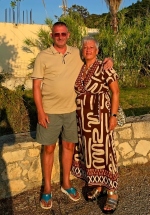 Before the treatment was available at Velindre, Caroline had to travel to London for a specialist scan – a journey that involved significant cost, planning and anxiety.
“It made a huge difference knowing I could have my treatment closer to home,” she said. “Travelling to London was daunting and expensive. Having it locally was much more reassuring.”
Caroline has now completed her full course of PRRT at Velindre and has responded very well to treatment. She described her care as outstanding, despite the treatment being newly introduced.
“The staff were absolutely amazing,” she said. “Even though it was new, I felt completely safe and supported throughout.”
Caroline found PRRT far more manageable compared to other treatments, with minimal side effects and a better quality of life during treatment.
“I was able to carry on with most of my normal life,” she said. Caroline hopes her experience reassures others: “Don’t be afraid of it. It’s straightforward, and you’re in very capable hands at Velindre.”
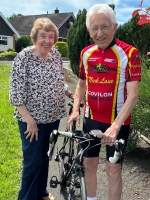 Alan, 82, was diagnosed with neuroendocrine cancer in July 2024. He initially began treatment with chemotherapy but unfortunately saw little progress.
When told that PRRT might be "the only way out", Alan was advised that this would usually mean travelling 150 miles to London for treatment. However, this was around the time that PRRT was beginning to be offered by Velindre Cancer Service, meaning Alan could receive his care much closer to his home in Monmouthshire.
"It was a real sense of relief not having to travel to central London to have my treatment," said Alan. "It's far from where I live, you can’t park, and it’s not easy travelling being a radioactive patient."
Alan has now completed three of his four cycles of PRRT at Velindre and says he started to see real benefits after the second cycle. Throughout his treatment, he felt well supported and informed.
"The nuclear medicine team kept me educated all the way through. Although I was apprehensive at first, everything was explained clearly and thoroughly, which really helped put me at ease. Everyone from the ward staff and consultant right across to the catering staff was so knowledgeable, professional, and careful."
For Alan, being able to access this specialist treatment closer to home has made a meaningful difference at an important time in his care.
Building for the future
The development of the PRRT service has also helped strengthen Velindre's capability in molecular radiotherapy, creating opportunities to further expand specialist treatments and research in the years ahead.
 Dr Carys Morgan, Medical Director at Velindre Cancer Service, said: "It's been fantastic to develop the PRRT service at Velindre. Most importantly, it has made a real difference for patients by allowing them to receive specialist treatment closer to home.
"We've received wonderful feedback from patients who have told us how much easier it has been to access care in Wales, and that's what matters most.
"The service has also been a great example of multidisciplinary working. Colleagues from many different professional groups have come together to develop new skills and deliver something truly innovative for patients.
"It puts us in a strong position for future developments in molecular radiotherapy, including clinical trials and new treatments, ensuring patients across Wales can continue to benefit from advances in cancer care."
The milestone reflects Velindre Cancer Service's ongoing commitment to delivering innovative, patient-centred care and improving access to specialist cancer treatments for people across Wales.
Velindre University NHS Trust, Unit 2,Charnwood Court, Parc Nantgarw, Nantgarw, Cardiff, CF15 7QZ
Tel: 029 2019 6161


