A Day in the Life of a CNS
16 March 2026
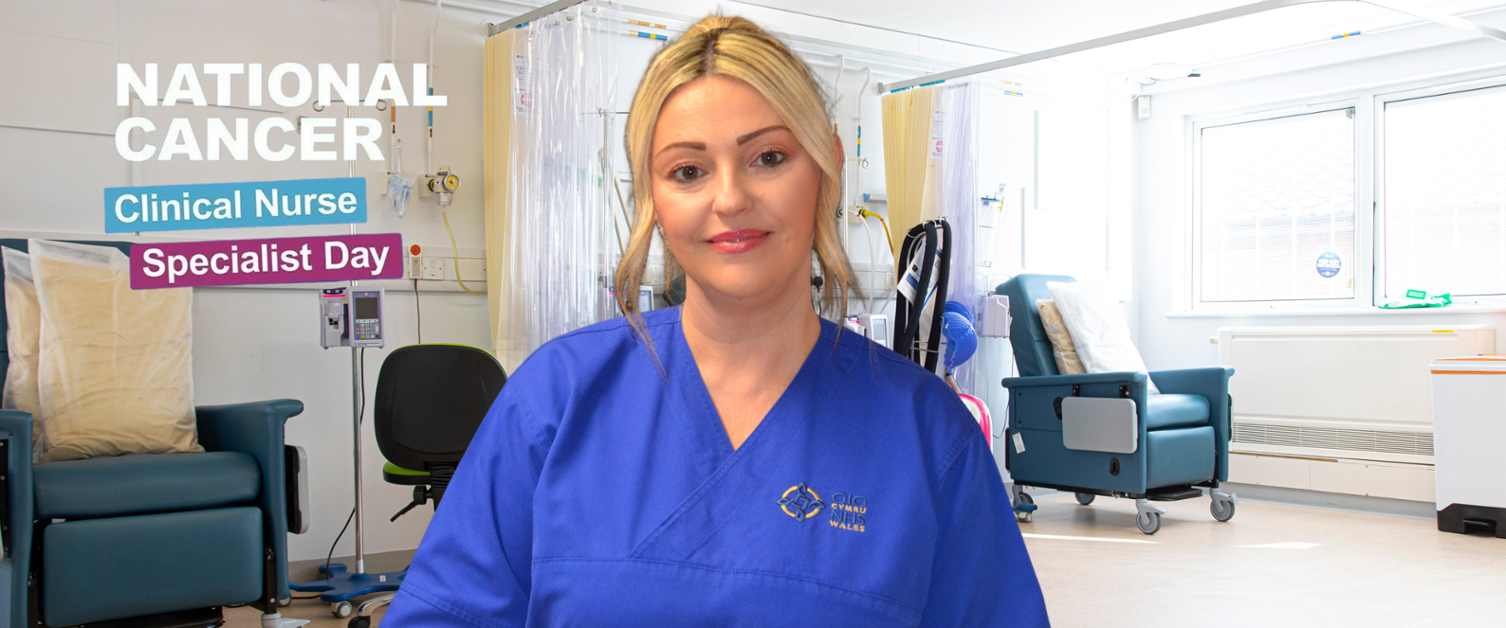
Today is National Cancer Clinical Nurse Specialist Day – an opportunity to highlight the vital part in cancer care that these staff provide.
Cancer Clinical Nurse Specialists (CNSs) are highly skilled nurses who provide expert care, holistic support, and guidance to patients throughout their cancer journey and beyond. They play a core role in care coordination within multi-disciplinary teams (MDTs), often being a patient's main point of contact for any issues they may have.
To give a better insight into the vital role of a Cancer Clinical Nurse Specialist, we spoke with Carlie Watson, one of our dedicated Melanoma CNSs, to hear what a typical day looks like for her.
Carlie is a much‑loved member of the Velindre community and was proudly named a winner of the People’s Choice Award at the 2025 Employee Excellence Awards. Her compassion, commitment, and genuine passion for supporting patients to live their best possible lives shines through in everything she does.
You can see her interview with Trust Chair Sara Moseley here.
Q: How do you like to start your workday?
"I like to start my day with structure — coffee in hand, emails triaged, urgent blood results checked, and a quick review of the clinic list so I know who I’m seeing and what they might need. That quiet 20–30 minutes of preparation makes a big difference."
"Is there an “average” day? Not really — and that’s part of what keeps the role engaging. Some days are clinic-heavy, some are treatment review days, others are dominated by phone calls, urgent symptom management, or MDT discussions. Even if the clinic list looks predictable, the conversations never are. Patients’ needs evolve, and you adapt with them."
Q: What does an average clinic look like?
An average clinic is a mix of new patients and follow-ups. With skin cancer, especially those receiving immunotherapy, conversations often include:
- Treatment side effects (particularly immune-related toxicities)
- Fatigue, skin changes, gastrointestinal symptoms
- Emotional wellbeing — anxiety before scans is very real
- Practical issues — work, family, travel, finances
- Education about when to call urgently
- Long-term surveillance and recurrence concerns
Skin cancer clinics can feel quite unique because visible disease affects how patients see themselves. Body image, scarring, and sun anxiety are common themes.
One of the most important parts of clinic is reassurance — not false reassurance, but grounded, informed guidance. Sometimes the biggest intervention is simply listening carefully and validating how overwhelming it can all feel.
Q: What do you do when you’re not in clinic?
"Outside of clinic, the role is still very active. That includes:
- Telephone triage and toxicity management
- Reviewing blood results and scan reports
- Attending MDT (usually weekly)
- Coordinating care with oncology, dermatology, surgery, and radiology
- Patient education and documentation
- Service development or audit work
Team meetings are regular. Typically, I have a weekly multi-disciplinary team (MDT) meeting, catch-ups with my CNS team, and teaching or service improvement meetings.
The multidisciplinary nature is one of the best parts of the job. We work closely with Oncologists, Dermatologists, Surgeons, Specialist registrars, Pharmacists, Research nurses, and Palliative care teams, as well as Macmillan and support services.
It’s collaborative, and no one works in isolation."
Q: Is there anything specific to your specialty which means your routine is different to other CNSs?
"Yes — immunotherapy changes the rhythm of the role.
Unlike chemotherapy, immune-related adverse events can happen at any time, even months into treatment or after it finishes. That means education and vigilance are central to practice. You’re constantly thinking: Could this symptom be immune-related?
There’s also a strong emphasis on:
- Rapid assessment pathways
- Clear safety-netting advice
- Close collaboration with acute oncology teams
- Supporting patients through long treatment durations
And in skin cancer specifically, sun safety and skin surveillance become long-term lifestyle discussions.
So while the CNS core skills are universal — assessment, advocacy, coordination — the content and urgency can feel quite specialised."
Q: How do you like to wind down after a busy day?
"After a busy day, I try to consciously “close” work — sometimes that’s finishing documentation before leaving so I don’t carry mental loose ends home.
Then it’s something grounding: a walk, cooking, a relax session, or just sitting quietly with a cup of tea and no clinical thinking allowed. On particularly intense days, something completely unrelated to healthcare helps — a good series, music, or time with family this is my favourite time and friends or course.
The role is incredibly rewarding, but emotional sustainability matters. You give a lot of yourself as a CNS, so winding down isn’t a luxury — it’s part of being able to show up fully the next day"
Funded by Velindre Cancer Charity, our Cancer Clinical Nurse Specialists (CNSs) are an infamous part of Velindre Cancer Service, giving tailored, patient-centred care and access to the full extent of the services we provide.
Emma James, Director of Nursing, AHPs and Healthcare Science at VCS, said:
"Our CNS workforce is at the heart of what we do at Velindre, and I am immensely proud of the dedication they show in delivering outstanding, person‑centred care. Today, and every day, we thank them for the difference they make to the lives of so many.”
Catherine Theron, Head of Nursing for Site-specific Teams (SST) Services at VCS, said:
"The CNS Team, nurses and cancer support workers, are integral to us being able to deliver high quality cancer care to our patients. They are knowledgeable, a point of contact for patients and provide holistic care as patients go through their cancer journey. I am privileged to work alongside them in Velindre."
Thank you to our incredible CNSs for everything you do!
Velindre University NHS Trust, Unit 2,Charnwood Court, Parc Nantgarw, Nantgarw, Cardiff, CF15 7QZ
Tel: 029 2019 6161


