Finding a calling and a 50-year career
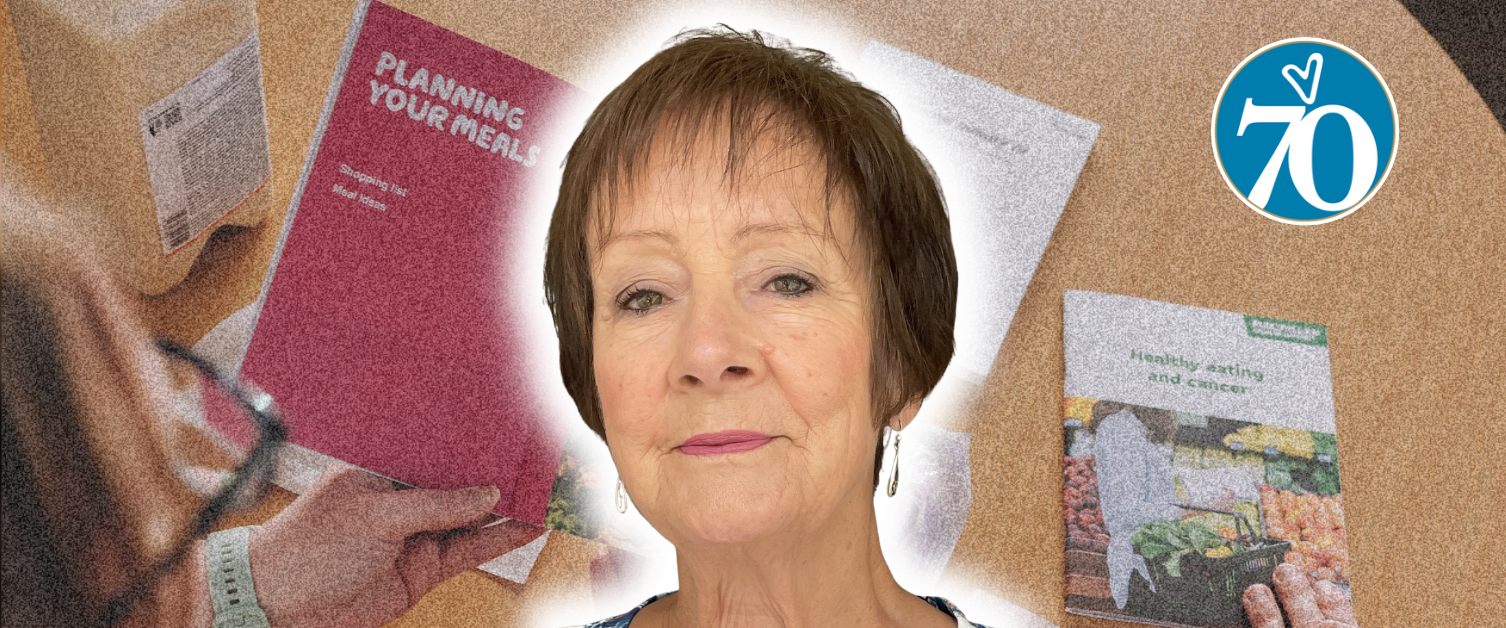
As part of our 70th anniversary campaign, we're sharing memories that capture the compassion, dedication and commitment that have shaped Velindre Cancer Service over the past seven decades. This is one colleague's story.
Few people can say they helped build an NHS service from the ground up. Even fewer can say they came back after retirement because they simply couldn't stay away.
For Sue Acreman, Velindre has been more than a workplace. It has been a major part of her professional life for decades. Her journey into cancer care began after caring for a patient with cancer while working at the University Hospital of Wales in the 1980s, which proved to be a turning point.
"I realised this was where I wanted to be," said Sue. "I wasn't interested in other areas of dietetics in the same way. Cancer care was what mattered to me."
After several years supporting terminally ill patients in the community, Sue joined Velindre in the 1990s when it became an NHS Trust. She was the first dietitian in Wales to work specifically in cancer care. What started as a one-person service would go on to support thousands of patients and families.
"When I arrived at Velindre, it was just me, two part-time occupational therapist and two physiotherapists. There wasn't an established dietetic service, so it was an amazing opportunity to develop something from scratch that would make a real difference to patients," said Sue.
Over the years, Sue's influence extended well beyond Velindre. In 2007, she became a Consultant Allied Health Professional in Cancer Rehabilitation. She also contributed to significant developments in cancer care across Wales and the UK , including drafting the national cancer rehabilitation strategies and helping develop numerous care standards and pathways.
Putting nutrition on the map
During a career spanning more than five decades, Sue has witnessed enormous changes in cancer treatment and patient care. One of the biggest changes has been the growing recognition of nutrition as a vital part of cancer treatment and recovery.
"When I first started, people could deteriorate very quickly. Over time, it became better understood how nutritional support could help people maintain their strength, tolerate treatment, and live well with cancer."
For Sue, supporting patients was never just the responsibility of one profession. Sharing knowledge and improving understanding of nutrition among other healthcare professionals has always been an important part of the role.
"Nutrition is a team sport. I've always believed that understanding nutrition is everyone's responsibility. It's important that all healthcare professionals recognise the difference good nutritional support can make to someone living with cancer, and this has been a big success at Velindre."
Despite advances in research, technology and treatment, she believes one thing has remained constant throughout her time with Velindre. The patient comes first.
"I have always thought that the person in front of me could be one of my own relatives. You have to think about how you would want them to be treated and make sure you give every patient the dignity, respect, and care they deserve.
"I think that's an attitude you'll find in so many people who work at Velindre. Positive patient experience has always been and must remain the priority for all those working in cancer care."
Retirement and returning to a special place
Sue retired from full-time employment in 2012, but her connection to Velindre never disappeared.
When the COVID-19 pandemic placed unprecedented pressure on healthcare services, she returned to support colleagues and patients. More recently, she came back as a locum in 2024 and 2025 before joining the bank in May 2026.
"Coming back felt like coming home. Obviously some things had changed. There were new people, different uniforms and I wasn't managing things anymore but I was really pleased to see how much dietetics had progressed and developed. The important things hadn't changed though.
"I've been qualified for over 50 years and one thing I'm certain about is I wouldn't work anywhere else."
Throughout Velindre's 70-year history, generations of colleagues have helped shape the service through their expertise, compassion and commitment to patient care. For Sue, that culture is what makes Velindre unique.
"I think people who work in cancer care often feel it's a vocation. It's more than just a job. You become part of something that really matters, and the people you work alongside make it incredibly special."
As Velindre Cancer Service celebrates its 70th anniversary, Sue's story reflects the contribution of countless staff who have helped build the service into what it is today. Looking back, her overriding feeling is one of gratitude.
"I've been able to do something I love, work with incredible people and make a difference to patients. I feel very lucky to have had that opportunity.
"In my opinion, we're working at the best place in the world, with the best patient groups.
"And if anyone can surpass the amount of time I've spent at Velindre, I'll buy them a drink!"
Your story is our history
The story of Velindre Cancer Service has been shaped by thousands of patients, families, staff, volunteers and supporters.
As part of our 70th anniversary campaign, we're collecting memories, photographs and stories that help tell the story of Velindre through the people who know it best.
Velindre University NHS Trust, Unit 2,Charnwood Court, Parc Nantgarw, Nantgarw, Cardiff, CF15 7QZ
Tel: 029 2019 6161


