Stereotactic Radiosurgery for Brain Conditions
This leaflet tells you about a type of radiotherapy treatment called Stereotactic Radiosurgery (SRS).
Please bring a list of your current medication each time you come to Velindre.
Smoking is not allowed within the grounds or inside Velindre Cancer Centre. If you would like help giving up, please ask.
It is important you do not get pregnant during your treatment as radiotherapy can harm a developing baby. If you think you may be pregnant at all, please tell the radiographers straight away.
If you have a pacemaker or Implantable Cardiac Device (ICD) you must tell your
doctor or a radiographer before or during your first planning appointment.
What is Stereotactic Radiosurgery (SRS/SRT)?
It is a very precise type of radiotherapy treatment which is given to a small area of the brain. All the radiotherapy is usually given in one treatment (or fraction) or a short course of treatments. We give it this way because it reduces the effect of the radiation on your normal brain tissue. It also helps to reduce the risk of late side effects.
To make sure that you are in the same position for each treatment, you will need to wear a special treatment mask (shell). This shell will feel tight, but this is what we need to ensure your treatment is accurate. If it is unmanageable or painful, please let the radiographers know.
Up to three planning visits are usually needed before you start treatment.
The first planning visit - MRI scan
You may need to have an MRI scan. This will usually be done before you have your mask made. It will help us plan your treatment.
The second planning visit - making your mask
The mask used for your treatment is made in the Mould room. The Mould room is part of the planning department for radiotherapy treatment. It is situated near out-patients, at the front of Velindre hospital.
What is a treatment mask?
The treatment mask is a plastic mask that you will wear each day when you have your radiotherapy treatment.
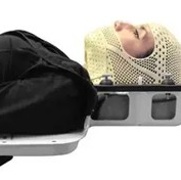
How is the mask made?
We will use warm plastic to take an impression of the back of your head and then the front of your head. The front piece has an opening, so your eyes, mouth and nose are uncovered. The plastic is warm as it goes on and it will be allowed to cool.
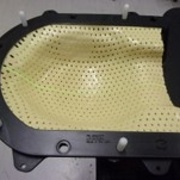
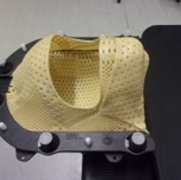
How long will it take?
It takes about 30 minutes to make the impression, but please allow 45mins for your whole appointment.
CT scan
You will have a CT scan after your mask making appointment. This will usually be the same day as the mask being made but on occasion may be the following day. This appointment will take approximately 15mins and does not require any IV contrast dye to be given.
When will I start treatment?
Treatment usually starts about two to four weeks after these planning visits.
Treatment
Your treatment will be given on a machine called a linear accelerator or LA. Your radiographers will fit your treatment mask, and they will make sure you are as comfortable as possible.
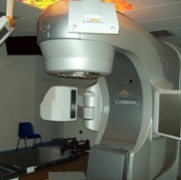
They will then place the treatment array around the frame of your mask (as photographed) that has infrared balls attached to it allowing the radiographers to set you up in the right position using specialist software.
This specialist software will also allow the bed to move in several direction and tilt to ensure you are in the exact position required to treat you accurately.
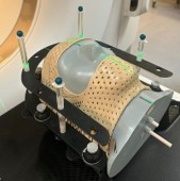
Your radiographers then leave the room to switch the machine on. The treatment is given from several directions. Each direction is called a “beam” and the whole treatment will take approximately 30-45 minutes to give. Your radiographers watch you carefully on CCTV monitors. If you have any problems during the treatment, the machine can be switched off at any time. Just wave your hand.
You will not see or feel anything when you are having your treatment, though you may hear the machine buzzing or beeping.
Once the treatment has finished the radiographers will take the mask off and you are free to go home.
Side effects
You should have been given a Macmillan brain tumour booklet where you will find the expected treatment side effects explained.
Follow Up
You will be given details on your follow up appointment at the end of your treatment. Your follow up maybe a few weeks after radiotherapy. The review team may call you at regular intervals after your treatment to run through some questions, but we will inform you of these dates closer to the time.
Contact Phone Numbers
Velindre Hospital 02920 615 888
Mould Room Radiographers 029 2031 6213
Review Radiographer Team 029 2061 5888 ext 6421
Transport from Merthyr
Cancer Aid Merthyr 01685 379633
Transport from Rhondda
Cynon Taff Rowan Tree 01443 479369
Helplines and websites
Tenovus cancer support line 0808 808 1010
Macmillan cancer support 0808 808 0000
Maggie’s Cardiff 029 2240 8024
https://www.maggies.org/our-centres/maggies-cardiff/
Stop Smoking Wales 0808 250 6061